Field note 04 · reviewed 10 August 2026
Alexandria: use the coast as a compass.
The Corniche makes the Mediterranean city readable, but not small. Divide its long urban line into clusters and let museums, streets and archaeological fragments build one layer at a time.
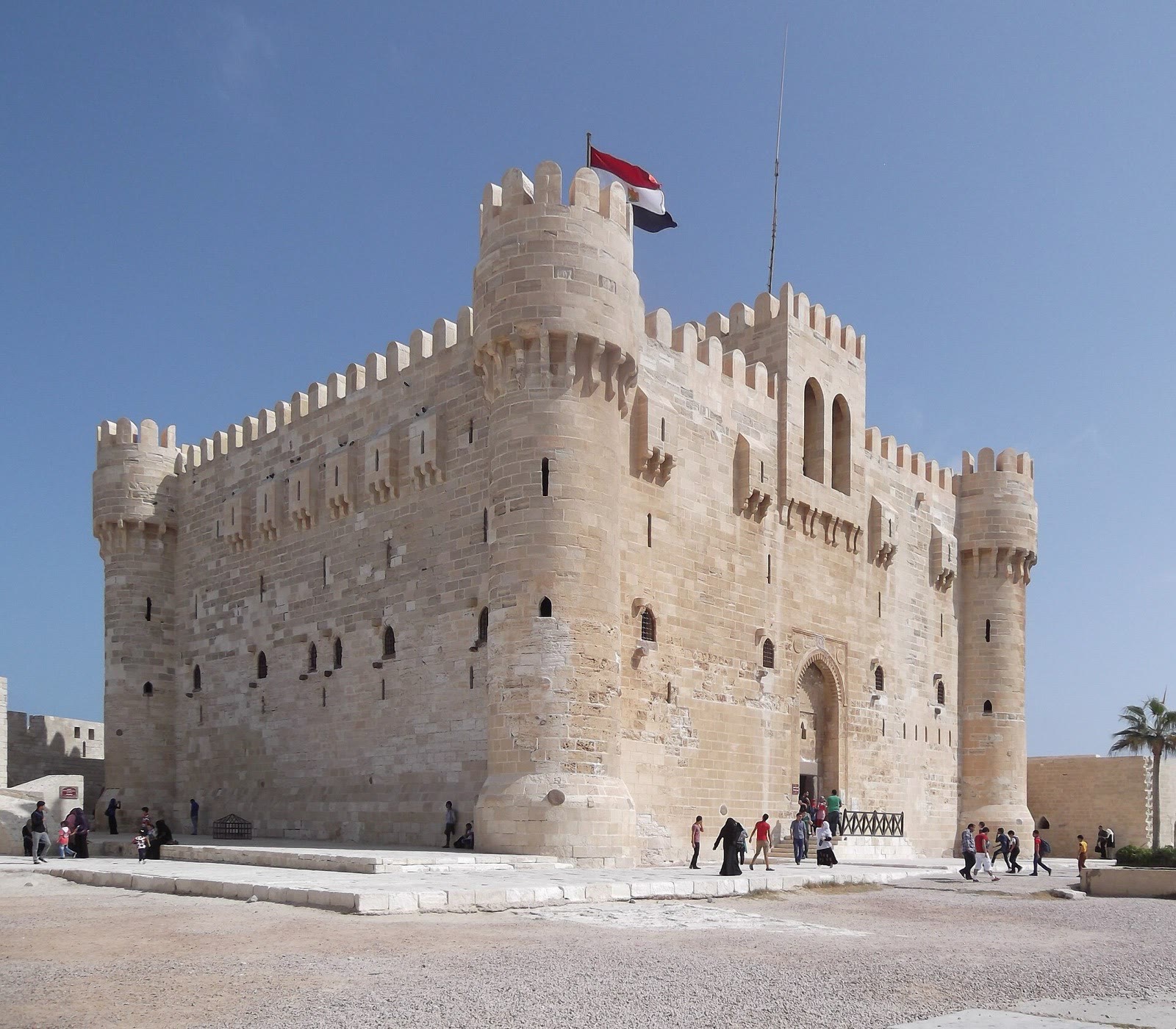
Alexandria stretches along the Mediterranean rather than gathering its visitor sites into one compact centre. The Corniche is an excellent orientation line: the sea remains on one side, neighbourhoods rise inland, and prominent coastal landmarks provide reference points. Yet the line is long, traffic is real and interesting sites also sit away from the water. A coherent day therefore needs clusters.
Choose a western or central emphasis
The western seafront around Qaitbay Citadel can anchor a coastal day. The fortress occupies a commanding site near the eastern harbour and offers a strong way to think about Alexandria’s defensive and maritime history. Nearby streets and harbour views can support that theme without requiring an immediate jump across the city.
A central and eastern emphasis may connect the modern Bibliotheca Alexandrina area with selected museums, streets or archaeological sites reached by a planned ride. The library is not a reconstruction of the ancient institution; it is a contemporary cultural complex that deliberately engages Alexandria’s intellectual identity. Check current visitor access and exhibition operation directly.
Expect ancient Alexandria to appear in fragments
Modern Alexandria sits over and around ancient layers. Visitors do not encounter an intact classical city laid out for inspection. Archaeological remains, reused materials, museum collections, later buildings and underwater heritage each reveal parts of a much larger history. This fragmented condition is not a failure of the destination; it is the central interpretive challenge.
Choose one archaeological interior or site and one museum context rather than racing among disconnected labels. The catacombs at Kom el‑Shoqafa, the remains at Kom el‑Dikka and other locations ask different questions. Confirm access before travel, then decide which one best supports the layer you want to understand.
| Question | Useful anchor | Supporting context |
|---|---|---|
| How did the city face the sea? | Harbour and Qaitbay area | Coastal walk and maritime views |
| How do ancient layers survive? | One archaeological site | A museum collection or interpretive centre |
| How is knowledge remembered? | Bibliotheca Alexandrina | Modern urban and cultural context |
| How did communities overlap? | A district with religious and civic heritage | Street-scale observation and one interior |
Do not confuse a sea view with easy walking
The Corniche can be windy, exposed and noisy. Road crossings may require patience, and construction can change pedestrian continuity. Use short, purposeful walks within a cluster and transport for the long gaps. A café or sheltered interior can provide a better midday reset than forcing a continuous shoreline march.
Wind, rain, humidity and rough sea conditions can change the feel of a coastal day. Check a current forecast and keep an indoor alternative.
Make a Cairo day trip honest
Rail can make Alexandria reachable from Cairo, but a “day trip” includes travel from accommodation to the departure station, boarding margin, the intercity journey and transport from the arrival station to the first cluster. Check Egyptian National Railways directly for the current service you intend to use. Do not rely on an old screenshot or a timetable copied by an unrelated site.
Choose two anchors and reserve a confirmed return option. A strong day might pair one coastal cluster with one interior or museum. A weak day attempts the fortress, library, catacombs, several museums and a long restaurant stop without accounting for movement. Staying overnight adds time for evening street life and a second historical layer, but accommodation choice should still consider the length of the city.
Read contemporary Alexandria too
The city is not only a memory of antiquity or a backdrop for literary nostalgia. It is a large, working Egyptian city. Photograph people only with permission, keep waterfront paths clear, dress for the actual setting and avoid presenting ordinary neighbourhoods as a performance for visitors. The best historical reading remains connected to the city that exists now.
A practical final test
Plot the first and last fixed point, then mark every transfer between them. If the route reverses direction along the coast more than once, remove or regroup something. Alexandria becomes calmer when the sea provides orientation and a small number of interiors provide depth.
Continue planningWhen to go: choose conditions, not slogans→