Field note 03 · reviewed 10 August 2026
Aswan: let the river set the order.
Islands, granite outcrops and changing light are not decoration around the itinerary. They are the structure. Plan crossings as real stages and leave the Nile enough time to become legible.
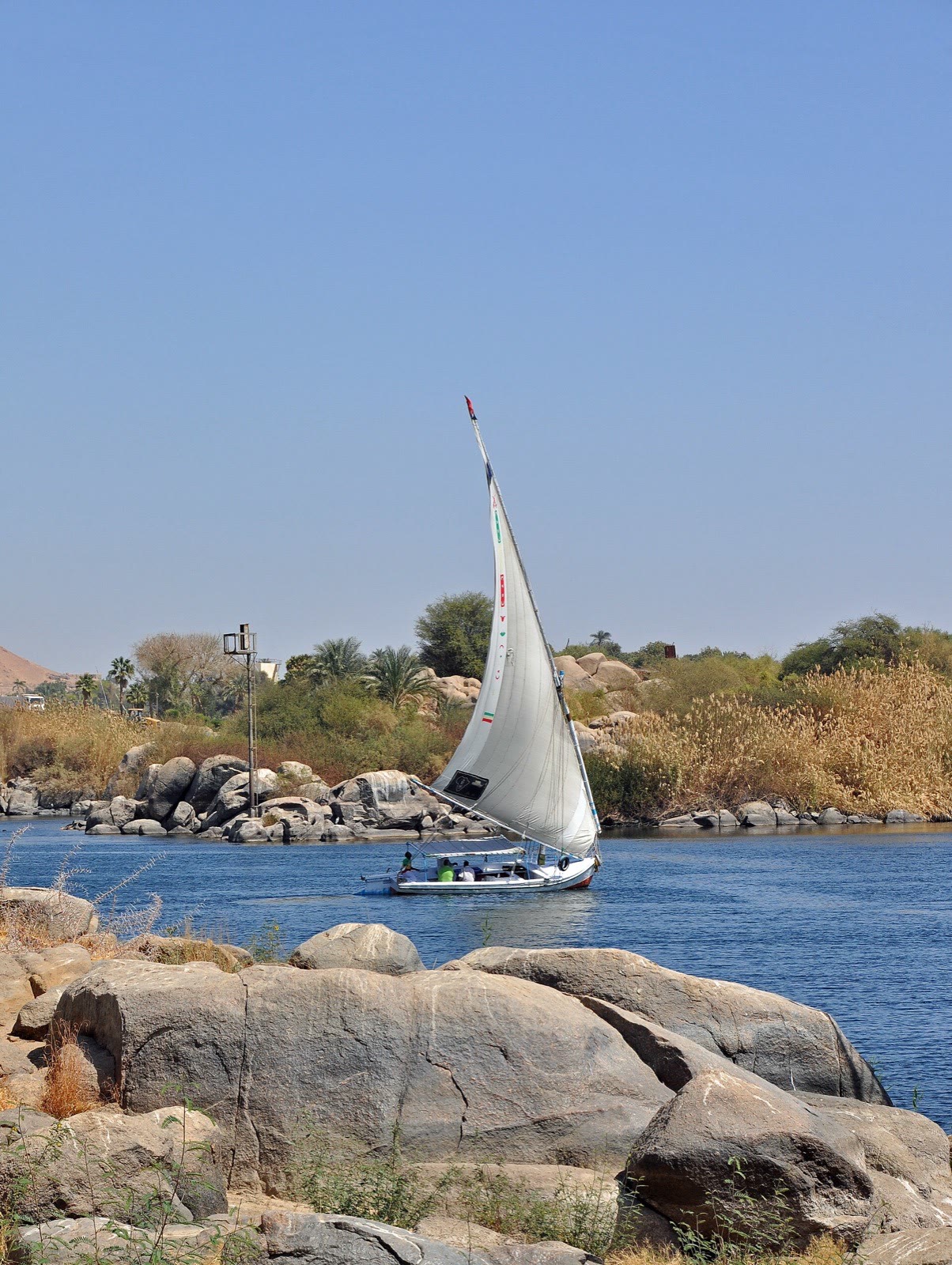
Aswan’s identity is inseparable from the First Cataract landscape: channels, islands, granite and river traffic shape how the city is seen and crossed. A timetable that reduces each boat journey to a transfer misses this structure. A useful Aswan plan allows the view, the crossing and the destination to form one experience.
Count crossings, not only attractions
Every island stop has at least two movements: reaching the landing and crossing the water. Some visits require another arrangement on the far side. Before grouping places, mark each landing on a map and ask whether the same boat, route or bank can logically connect them. Three appealing names may create six separate negotiations and little time on land.
Elephantine Island, the west bank, the botanical garden area and the city’s eastern waterfront all relate to the Nile differently. Choose a primary river question for the day: archaeology and settlement, landscape and plants, or modern river life. That theme helps you decide which crossing supports the day and which belongs tomorrow.
Give Philae its complete journey
The temple complex now associated with Philae was relocated to Agilkia Island during the international campaign connected with the Nubian monuments. Visiting therefore includes a road approach, a boat stage and an island site. Treating only the time inside the temple as “the visit” produces a fragile schedule.
Confirm current access, ticket arrangements and boat procedures through official channels and at the authorised point of departure. Clarify what is included before boarding and keep enough margin for the return. On the island, read the architecture as a relocated ensemble while remembering that the modern setting is part of a major conservation history.
If a site needs both road and boat transport, do not place a fixed departure immediately after it. Build the buffer before you need it.
Read Nubian history beyond a decorative label
Nubian culture is not a colour scheme for visitor photographs. The region has its own languages, histories, displacement experiences, architecture, music and living communities. The Nubian Museum can provide a valuable interpretive framework before or after village visits and archaeological sites. Check its official operation before building the day.
If visiting a community with a guide or boat operator, ask what the visit includes and who benefits. Seek permission before photographing identifiable people, homes or work. A purchase or invitation does not automatically grant permission for a camera. Listening to how residents describe their own place is more useful than arriving with a ready-made “authentic village” script.
Use light as a planning tool
Aswan’s open water and granite can feel visually and physically different through the day. The cooler edges of daylight are valuable for walking and exposed viewpoints; the brightest period may suit a museum, a long meal or a protected rest. A felucca ride depends on wind and local conditions, so it should not be treated as a guaranteed clockwork service. Motorboats answer a different need.
| Movement | Useful for | Question to settle |
|---|---|---|
| Public ferry | A defined crossing used by local passengers | Which landing and current operating pattern? |
| Motorboat | Point-to-point or arranged island access | Route, return, price and safety terms? |
| Felucca | A wind-dependent experience on the water | Conditions, duration and return plan? |
| Road vehicle | Sites away from the central river edge | Exact pickup, waiting and final gate? |
Keep Abu Simbel separate in your mind
Abu Simbel is connected to the history of Nubian monuments but not a quick extension of a central Aswan walk. Reaching it involves substantial travel by road or air, with timing and operator arrangements that must be checked close to the journey. If it is a priority, give it a dedicated block and protect the surrounding day from additional demanding commitments.
A simple Aswan rhythm
Choose one substantial site or museum, one river movement and one unstructured period by the water. On another day, choose a different bank or a dedicated long-distance excursion. This may look modest on paper; in practice it allows the river landscape, living culture and archaeological story to remain connected.
Next field noteAlexandria: use the coast as a compass→