Field note 02 · reviewed 10 August 2026
Luxor: plan the banks as separate landscapes.
The Nile divides more than a map. East-bank temple complexes and the west-bank necropolis ask for different movement, light and attention. Give each side its own planning block.
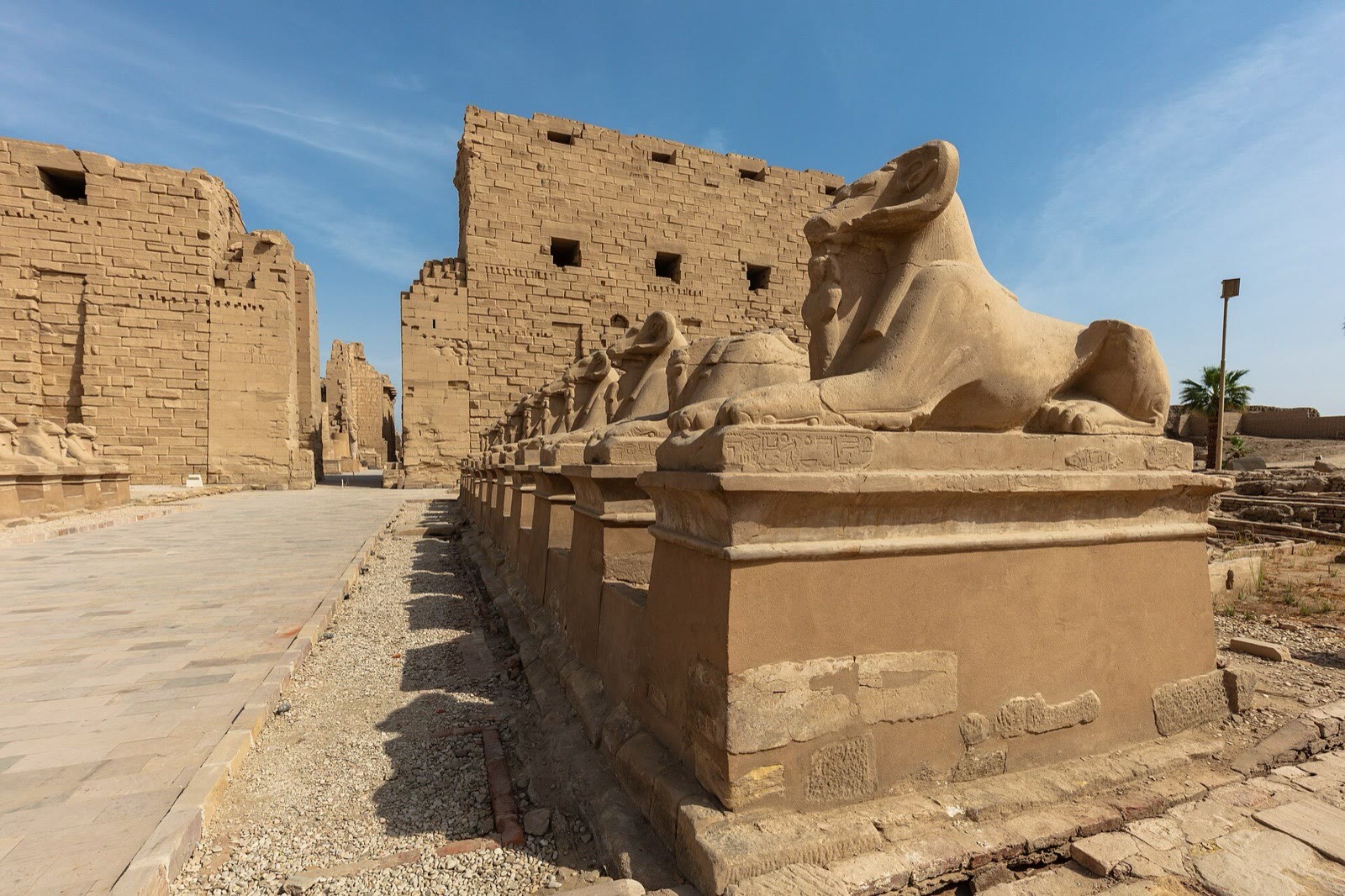
Luxor contains a concentration of ancient sites that can tempt visitors into collecting names. The better organising idea is landscape. On the east bank, monumental temples relate to the living city and to ceremonial connections along the Nile. On the west bank, temples and tombs form a necropolis shaped by cliffs, valleys and long exposure to sun. The river between them is a meaningful boundary as well as a practical one.
Let the east bank explain sequence
Karnak is a complex, not a single room. Its courts, pylons, columns, sacred spaces and later additions reward visitors who can follow a route without racing toward the next famous object. Luxor Temple has a different scale and urban relationship. The avenue connecting the temple precincts is part of the historical story, but current walking conditions and access should be checked rather than assumed.
For many visitors, one large temple complex in the cooler part of the day plus one smaller urban experience later is enough. The gap can include food, rest and a change of light. This rhythm preserves the ability to notice relief, proportion and spatial transitions.
Treat the west bank as a network
The west bank is distributed. Royal tombs, elite tombs, workers’ settlements and memorial temples occupy different settings, with transport needed between many of them. Choosing stops by category makes the route more intelligible. A royal tomb can introduce burial architecture; a workers’ site can shift attention to the people who built and decorated tombs; a memorial temple can restore the relationship between architecture and open landscape.
| Question | Possible focus | Why it works |
|---|---|---|
| How were tombs made? | Workers, decoration and one burial interior | Connects labour to the finished space |
| How does architecture meet landscape? | One memorial temple and its approach | Leaves time to read scale and setting |
| How did status shape burial? | A careful contrast of tomb types | Builds comparison instead of accumulation |
Openings, restoration work and ticket arrangements can change. Confirm what is accessible on the day and choose a coherent small set from the available options.
Design for heat before ambition
Open terrain and stone surfaces can make exposure feel stronger than the air temperature alone suggests. Put the most demanding outdoor movement earlier, carry water according to current site rules and know where the next genuine shade or seated break is located. A vehicle provides movement, not guaranteed recovery; the plan still needs pauses outside transit.
Footwear matters on uneven surfaces, but so does restraint. Barriers and marked paths protect fragile ground and decoration. Never touch painted reliefs or carved surfaces, even when they appear robust. Flash, tripods and phone photography may be regulated differently in different interiors, so read the posted rule instead of copying another visitor.
Make crossings explicit
Do not let “cross the Nile” hide the practical decision. Public ferries, arranged boats, road crossings and hired vehicles serve different starting points and schedules. Confirm the exact landing or pickup, agree on the arrangement where required and leave a buffer before any fixed departure. A boat crossing may be a memorable part of the day, but it should not become a rushed connection.
Leave room for the modern city
Luxor is a living city around celebrated archaeological landscapes. Markets, homes, fields, river traffic and contemporary religious life are not decorative extras. Be thoughtful when photographing people, keep transactions clear and avoid turning ordinary work into an uninvited performance. Responsible attention makes the ancient landscape more—not less—connected to the present.
A workable two-day logic
Use one day for the east-bank complexes and the urban river edge. Use another for a west-bank route built around two or three connected questions. More days allow a slower return to a complex, a museum visit or time in the surrounding landscape. Fewer days require sharper selection, not faster movement.
Next field noteAswan: let the river set the order→