Field note 01 · reviewed 10 August 2026
Cairo: let one district hold the day.
The capital becomes understandable when you stop treating every famous name as adjacent. Choose one urban layer, give it a clear radius and make the transfer to the next layer a deliberate decision.
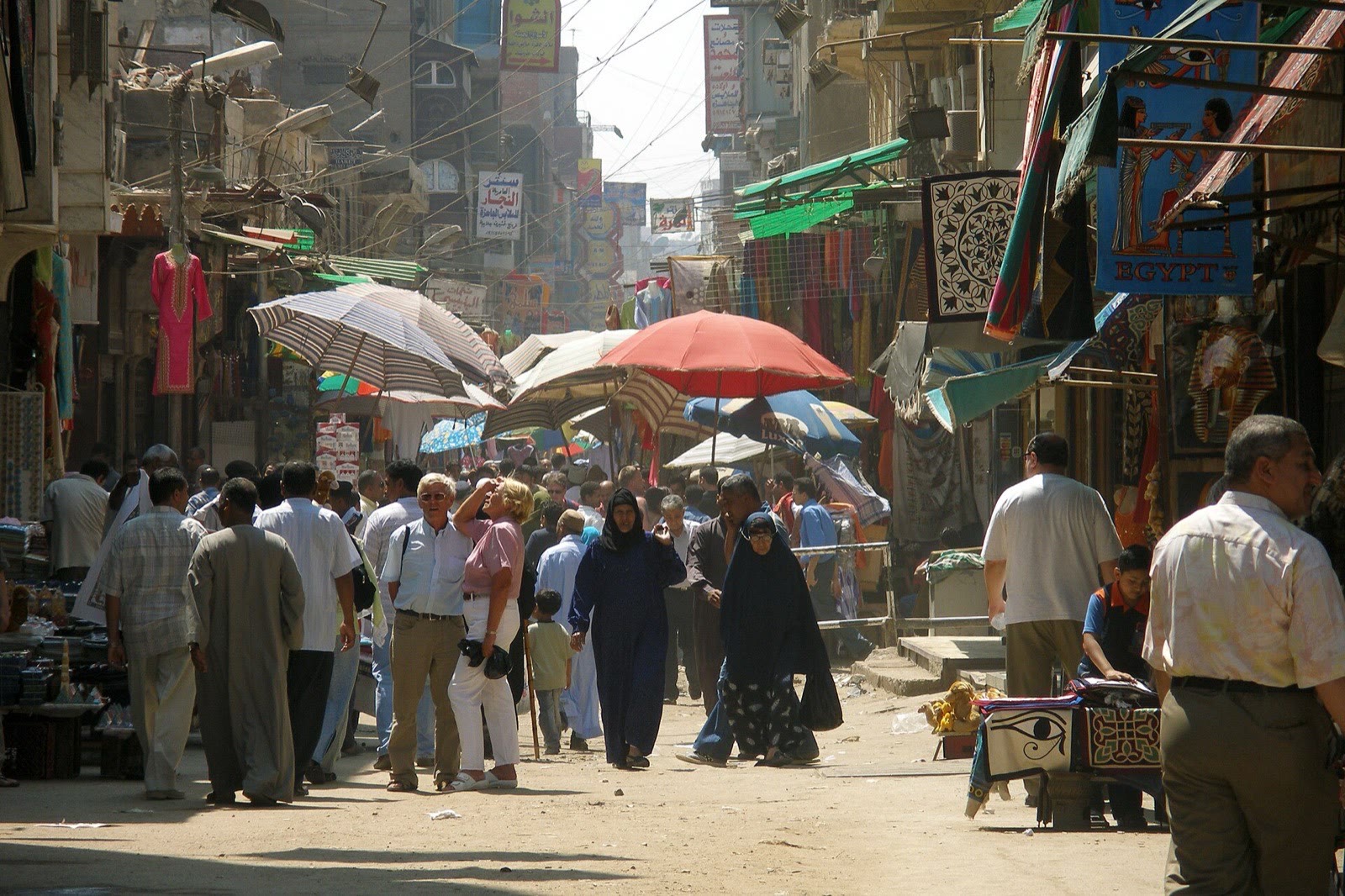
Cairo is not a compact monument park. It is a vast, active metropolis containing several historical geographies: the pyramid fields on the western edge, the medieval streets and monuments of Historic Cairo, the nineteenth- and twentieth-century centre, Nile islands, Coptic Cairo and expanding residential districts. A plan that jumps among these layers may look efficient on a list while spending its best hours in traffic.
Begin with one anchor, then draw a radius
An anchor is the place that matters most that day. Around it, add only sites that share a genuine district or a simple onward movement. In Historic Cairo, the anchor might be a section of Al‑Muizz Street. Nearby mosques, houses, markets and street life can then become one continuous reading of the area. The value is not merely shorter travel: buildings begin to explain one another.
Downtown requires a different lens. Its streets, squares, cafés and modern institutions belong to another chapter in Cairo’s history. Giza is different again. The plateau is geographically separate from the historic core, exposed to sun and large enough to demand attention on its own. Putting Giza and a dense medieval walking route into the same tightly timed half-day usually serves neither.
| Cluster | What holds it together | Planning question |
|---|---|---|
| Historic Cairo | Walkable sequences of religious, civic and market spaces | Which section can you read without rushing? |
| Downtown | Modern urban history, streets and institutions | Which interiors are actually open today? |
| Giza plateau | One archaeological landscape | How will you manage exposure and movement on site? |
| Coptic Cairo | A compact group of religious and historic places | What dress and access rules apply at each stop? |
Give dense places an attention budget
A carved doorway, a courtyard and a long interior are not equivalent entries on a checklist. Historic buildings ask visitors to adjust to light, notice material and read inscriptions or interpretation. After several such interiors, the eye stops working carefully. A useful rule is to choose one demanding anchor for each half-day and let smaller discoveries support it.
Build a seated break into the route before you need it. That break is not lost time; it is where you check the next entrance, drink water and decide whether the original plan still fits the heat and energy of the group. Cairo rewards flexible travellers because the street between monuments is part of the experience.
A map can show distance but not crossing difficulty, traffic, security screening or the time required to find an entrance. Confirm the last segment locally.
Use transport for the gap it solves
The Metro can be useful where stations match the journey, while hired cars may solve a point-to-point gap that rail does not. Walking is valuable inside a coherent area but should not be assumed between districts simply because two names appear near each other at a broad map scale. Read the getting around guide and check current information from the relevant operator.
When arranging a car, identify the exact pickup point and destination rather than only the district name. Large sites and long streets can have multiple gates. Save the destination in Arabic where possible and keep an offline map available; neither replaces local confirmation, but both reduce avoidable ambiguity.
Keep the living city visible
Historic Cairo is not a stage set. Homes, shops, worship and everyday work continue around heritage sites. Keep doorways clear, follow photography rules, ask before photographing identifiable people and reduce your voice where the space requires it. Clothing expectations vary by setting; carrying a light layer makes it easier to respond respectfully.
The most successful Cairo day often ends with fewer “completed” attractions than the original list. It also ends with a clearer sense of how one part of the city fits together. That understanding is the better measure of progress.
Pressure-test tomorrow tonight
- Mark one anchor and no more than two supporting stops.
- Check official opening and entry information for each interior.
- Estimate the transfer from your actual accommodation, not from “central Cairo.”
- Place a shaded break before the most exposed part of the day.
- Choose one stop that can be dropped without damaging the route.